ICC Men's T20 World Cup: Hierarchy challenged as the lower-ranked teams punch above their weight
Home
In the first week of the 2026 T20 World Cup, the script has refused to cooperate.
Scoreboards have tilted unexpectedly. Crowds have fallen silent in disbelief and nations long cast on the margins of the sport have walked off fields not just competitive, but commanding.
Zimbabwe ensured the tremors grew louder. Full member side alright but ranked 11th and absent from the 2024 edition, they outplayed the 2021 champions and current No.2-ranked Australia by 23 runs in a performance of rare control.
Calculated with the bat and ruthless with the ball, they struck four times in the powerplay through Blessing Muzarabani and Brad Evans and never loosened their grip. The fielding was spotless, the intensity unbroken. Nineteen years after beating Australia in 2007, Zimbabwe have done it again!
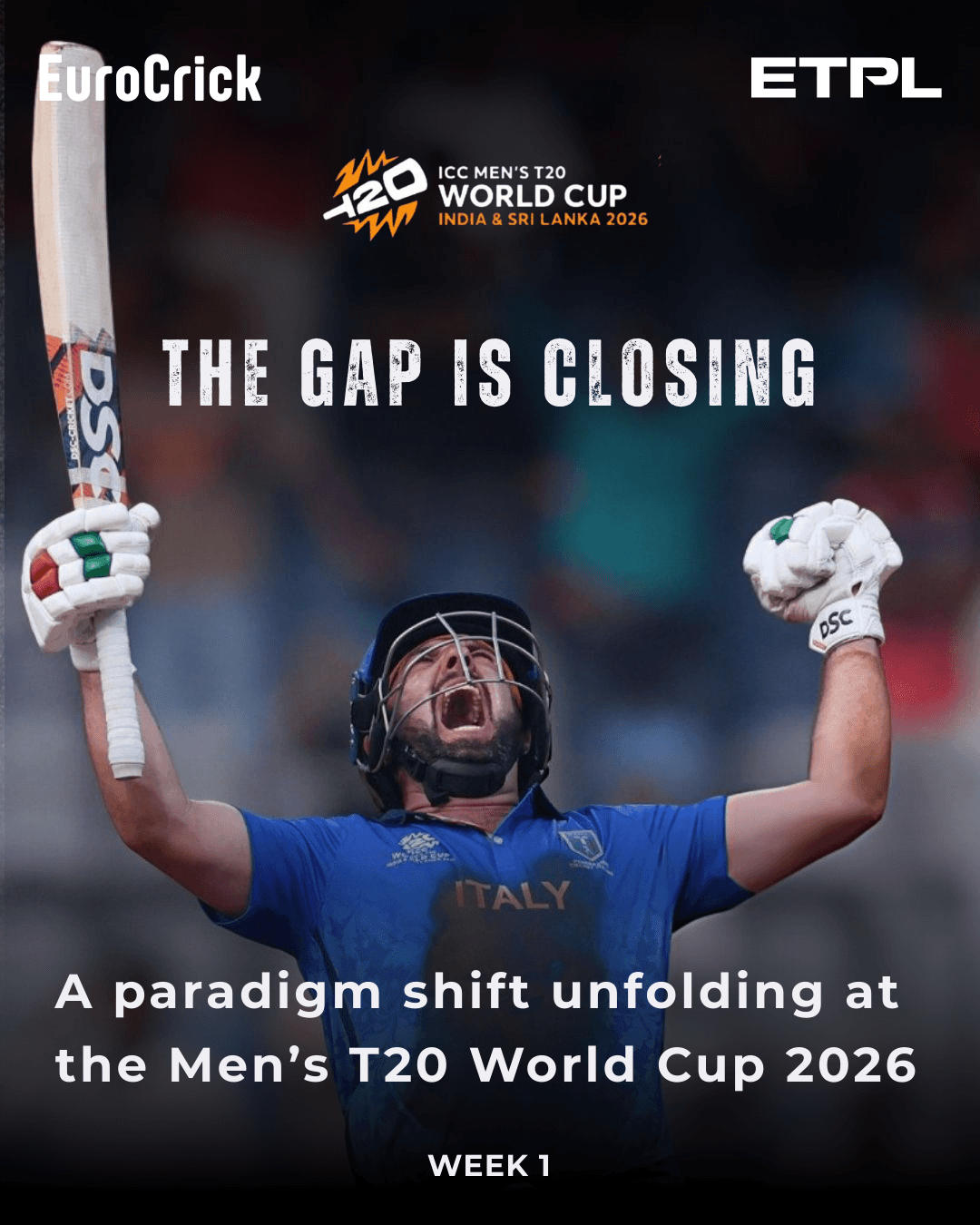
At the Wankhede Stadium, Italy’s ten-wicket dismantling of Nepal felt like a moment that travelled far beyond Mumbai. Nepal, ranked ten places above them, arrived with expectation and noise. Italy left with a statement. The Mosca brothers, Justin and Anthony, chased down 124 in under 13 overs, reducing a full house into stunned quiet. It was not merely a win, it was authority. When Crishan Kalugamage later called it “un momento storico,” he was not indulging in hyperbole. For a side built on heritage, migration and belief, it was validation.
Italy’s story is stitched together across continents. The Manenti and Mosca brothers grew up in Australia with Italian roots. Kalugamage honed his legspin between shifts at a pizzeria in Lucca and training trips to Rome. Others qualified through ancestry or marriage, united less by geography and more by commitment. What they lack in central contracts and deep domestic structures, they compensate for with clarity of purpose. Their opening gambit against Nepal, throwing the new ball to offspinner Ben Manenti after reading conditions the night before, spoke of preparation, not romance.
A cricketing performance that caught the eye of one of the greatest to ever play it
If Italy’s win was emphatic, USA’s performance against India was defiant. At the same Wankhede, the hosts were 77 for 6, under the pump from a pace attack led by Shadley van Schalkwyk. The 37-year-old seamer, who once moved continents chasing a single World Cup dream, now leads the tournament’s wicket charts. His variations, his homework, his refusal to be intimidated by reputation, they reduced a star-studded batting line-up to survival mode.
USA batter Shayan Jahangir framed it plainly, exposure and funding matter, but so does hunger. Many of these cricketers balance professional ambitions with day jobs, modest facilities and limited high-profile fixtures. Yet when placed under global lights, they have not shrunk. They have adapted. Major League Cricket has broadened horizons at home, franchise stints abroad have toughened skills. The result is a side that believes it belongs.
Nepal, for their part, nearly rewrote another script altogether. Against England, they pushed one of the sport’s traditional heavyweights to the brink, propelled by fearless strokeplay and the audacity that has become their hallmark. Dipendra Singh Airee, already a record-breaker in the format, symbolises a generation that refuses to wait its turn.
After England survived Nepal’s surge, Michael Vaughan reflected, “What a fantastic game of Cricket .. The skill shown by the Nepal players was exceptional .. A win is a win for England"
Then there was the Netherlands’ tight contest with Pakistan, a match that swung on fine margins and tactical nerve. For a country that has steadily invested in white-ball depth, these are no longer isolated flashes. They are part of a pattern.
What binds these narratives is not novelty but narrowing distance. Data analysis is accessible. Franchise leagues have created shared dressing rooms and cross-pollination of ideas. Conditioning standards have risen. Players move, learn, return. The gap, once measured in infrastructure and opportunity, is being eroded by information and intent.
There is also something more elemental at work. For Italy’s squad, singing the anthem in Chennai carried the weight of migration stories and family sacrifice. For USA’s group, it is about proving cricket has a future in a crowded sporting marketplace. For Nepal, it is about matching fervent support with results that echo beyond social media clips. For the Netherlands, it is about sustained credibility.
In just seven days, the tournament has delivered a reminder, hierarchy in T20 cricket is fragile. On surfaces that reward clarity and courage, reputation counts for little once the first ball is bowled.
The world has begun to notice. Not as a curiosity, not as a fleeting headline, but as a recalibration. These sides are no longer content with participation. They are shaping contests, dictating phases, and demanding attention.
If this is only week one, the rest of the tournament may have even fewer certainties left intact.


