ICC Men’s T20 World Cup: Scotland let control slip as familiar faultlines resurface against Nepal
Home
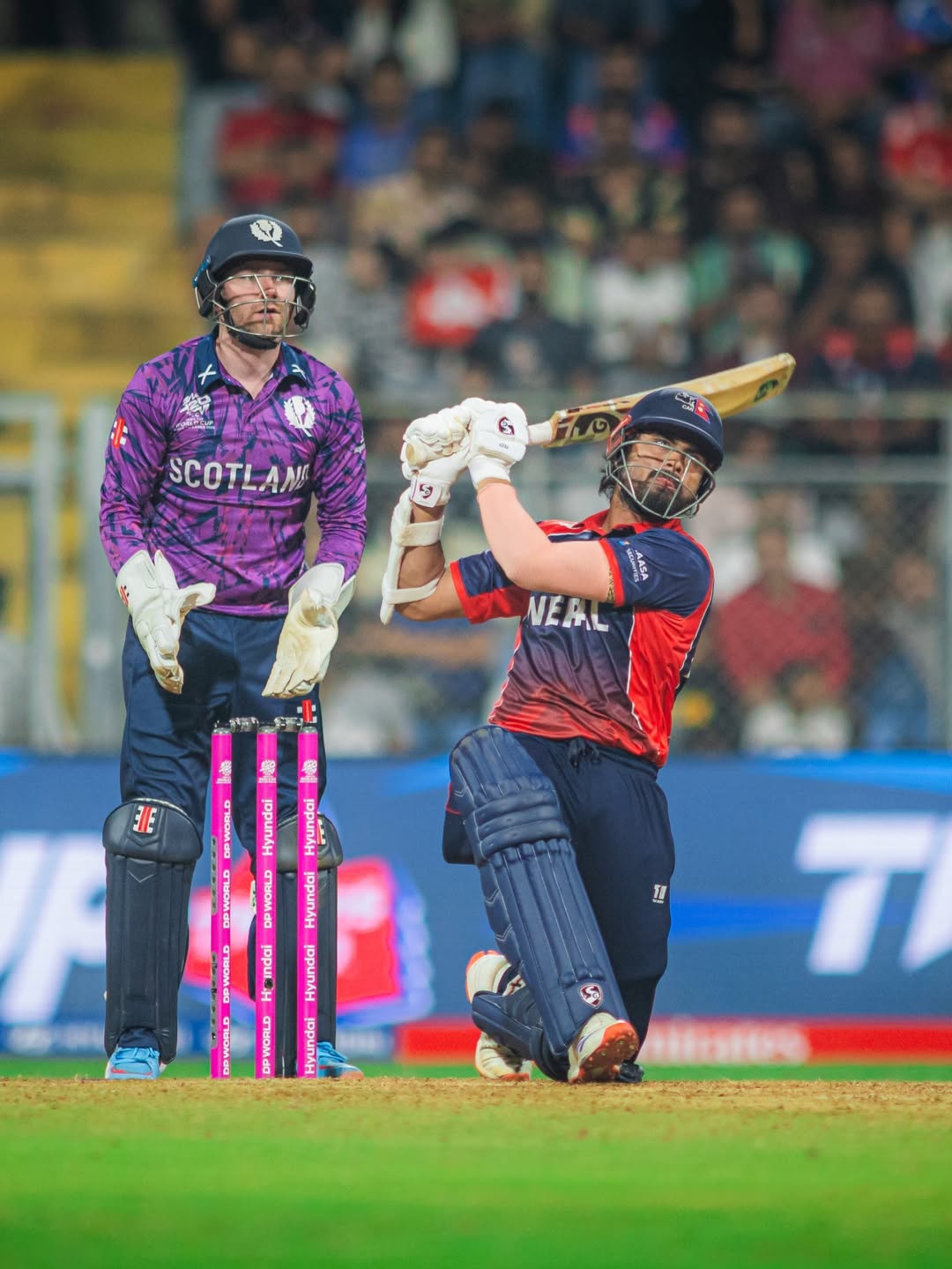
Image courtesy: cricketassociationofnepal/IG
For Scotland, this was a contest defined by control gained and control conceded.
At 132 for 1 in the 14th over at the Wankhede Stadium, Scotland were eyeing something far north of 185.
Michael Jones was in full flow, crisp through the off side and ruthless on anything marginally short, his 71 from 45 balls (8 fours, 3 sixes) the centrepiece of an opening stand of 80 that laid the perfect foundation. For the first ten overs, it was Scotland dictating terms, manipulating the field and forcing Nepal onto the defensive.
However, T20 cricket, particularly at a venue like this, rarely allows for comfort.
From a position of dominance, Scotland lost their way. The dismissal of Jones, undone by a clever knuckle ball from Sompal Kami, proved the turning point. What had been controlled aggression became hesitation. Pace-off deliveries gripped just enough on the red soil at Wankhede, yorkers were executed smartly and the scoring rate that once threatened to spiral beyond control stalled abruptly. The slide from 132 for 1 to 170 for 7 was not dramatic, but it was decisive.
For Scotland though, it was, uncomfortably, a familiar script.
On 7 February against the West Indies, Scotland had appeared in control of a chase, requiring 69 from 42 balls with seven wickets in hand. From there, the innings unravelled: six wickets for 22 runs in the space of 24 deliveries, momentum dissolving almost in slow motion.
Ten days later in Mumbai, the pattern repeated itself, this time from a position of setting up a target rather than during a chase, but with the same sense of opportunity slipping through Scottish fingers.
With the ball, however, there was fight befitting a side playing for pride in their final outing of this tournament. Nepal’s openers surged to 74 without loss before Michael Leask’s three-wicket burst dragged Scotland back into the contest. At 98 for 3 with 71 required from the last six overs, the game was delicately poised. Scotland had forced their way back into the contest.
Yet once again, the decisive phase eluded them. Dipendra Singh Airee’s counterattack tilted the balance, and despite disciplined spells and committed fielding, Scotland were left watching the target diminish. The margins that had once favoured them were suddenly unforgiving.
Brad Currie and Brad Wheal did well to force the match into the final over but coudln't stop Nepal for winning their first-ever T20 World Cup encounter. That brought an end to Scotland's campaign with a mixture of validation and what-ifs.
Scotland were not even meant to be here in the first place. A late call-up handed them an unexpected place at this tournament, after a winter without international cricket and minimal preparation against elite opposition.
Yet they arrived and responded with conviction. They breached the 200-run mark against Italy, becoming the first Associate side ever to do so at a men’s T20 World Cup, and forced both West Indies and England to work hard for their victories. For long stretches in multiple games, they were not passengers but protagonists.
What ultimately punctured their promise were collapses at key moments, phases where control gave way to chaos.
For a side assembled at short notice and short on match practice, Scotland have offered enough evidence to suggest that with consistent international cricket and sustained exposure, those fragile passages could yet harden into match-winning steel. The raw materials are present. The challenge now is continuity.
They leave this tournament without progression to the Super 8s, but not without progress.


